





| STOCK MARKET LIVE | BSE | NSE | ||||||
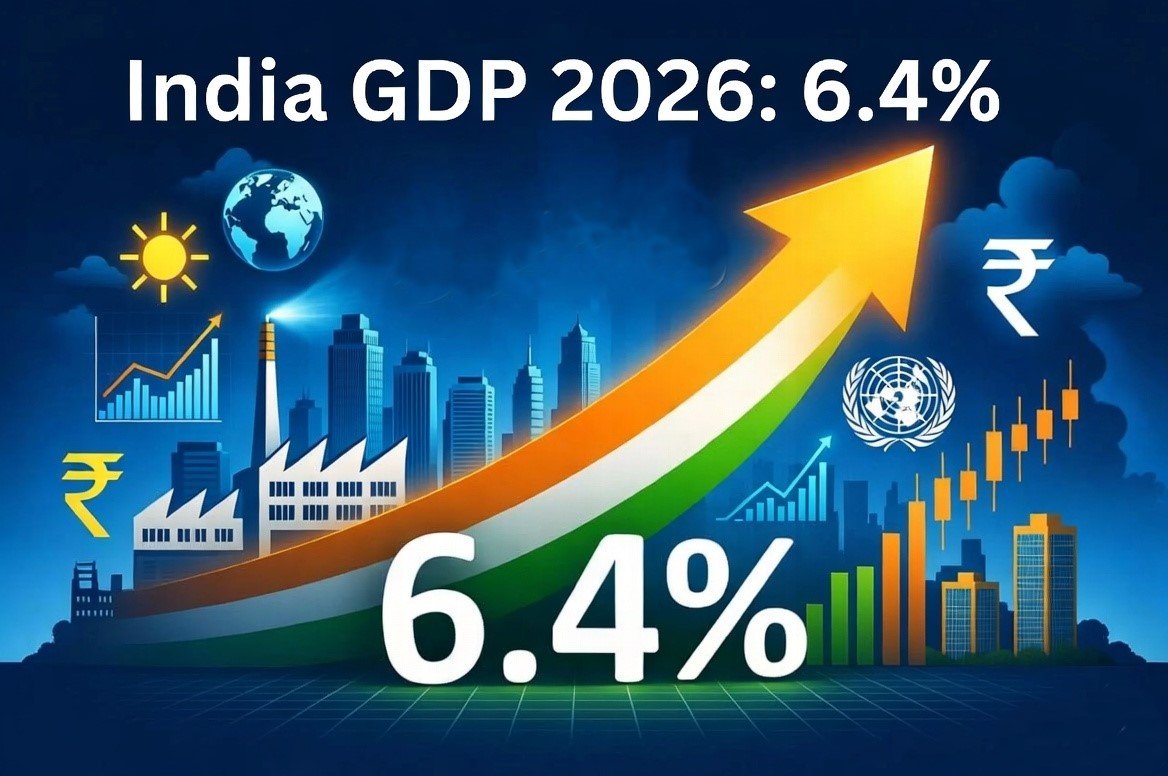
UN cuts India's 2026 GDP forecast to 6.4%
NEW DELHI: The United Nations has revised downward its economic growth projection for India in 2026 to 6.4 per cent from the earlier estimate of 6.6 per cent, citing heightened global uncertainties, rising energy costs, and economic shocks stemming from the ongoing West Asia crisis.
In its mid-year update of the *World Economic Situation and Prospects (WESP)* report released this week, the UN Department of Economic and Social Affairs (DESA) noted that while India continues to remain one of the fastest-growing major economies in the world, it is not immune to global headwinds. The downgrade reflects increased energy import bills, tighter financial conditions, and inflationary pressures triggered by the prolonged conflict in West Asia.
The report projects global GDP growth to slow to 2.5 per cent in 2026, down from previous forecasts, as geopolitical tensions disrupt energy flows and supply chains. For India, higher crude oil prices are expected to widen the current account deficit and moderate domestic consumption and investment momentum in the latter half of the year.
Despite the marginal cut, economists view the 6.4 per cent growth as resilient. India’s economy is still projected to outperform other major economies significantly. Strong domestic demand, robust public capital expenditure, services sector expansion, and ongoing structural reforms are expected to support this trajectory. The UN also highlighted that India is likely to surpass Japan to become the world’s fourth-largest economy by FY26 and Germany by FY29.
Finance Ministry officials played down the revision, stating that India’s fundamentals remain strong. “Our growth drivers are largely domestic. We continue to focus on manufacturing, infrastructure, and the digital economy push under Atmanirbhar Bharat,” a senior official said.
However, experts caution that sustained high oil prices and global financial tightening could pose risks. “A prolonged West Asia crisis may force the Reserve Bank of India to maintain higher interest rates for longer, impacting credit growth and private investment,” said Dr. Rajiv Kumar, former Vice Chairman of NITI Aayog.
The UN forecast aligns broadly with other agencies, though the International Monetary Fund (IMF) and World Bank maintain slightly higher projections for India. The government is expected to release its first-quarter GDP data for FY26 next month, which will offer more clarity on the ground reality.
Analysts believe that timely policy interventions, including boosting domestic oil production, accelerating exports under new trade agreements, and deepening capital market reforms, could help India outperform even the revised estimates.
As India navigates this challenging global environment, the 6.4 per cent growth still signals a steady expansion that could add millions of jobs and support the government’s ambition of becoming a developed nation by 2047.
Reporter
Crisp, and to the point news coverage from India and around the world.
View Reporter News