





| STOCK MARKET LIVE | BSE | NSE | ||||||
European leaders issue urgent war warnings as security concerns escalate
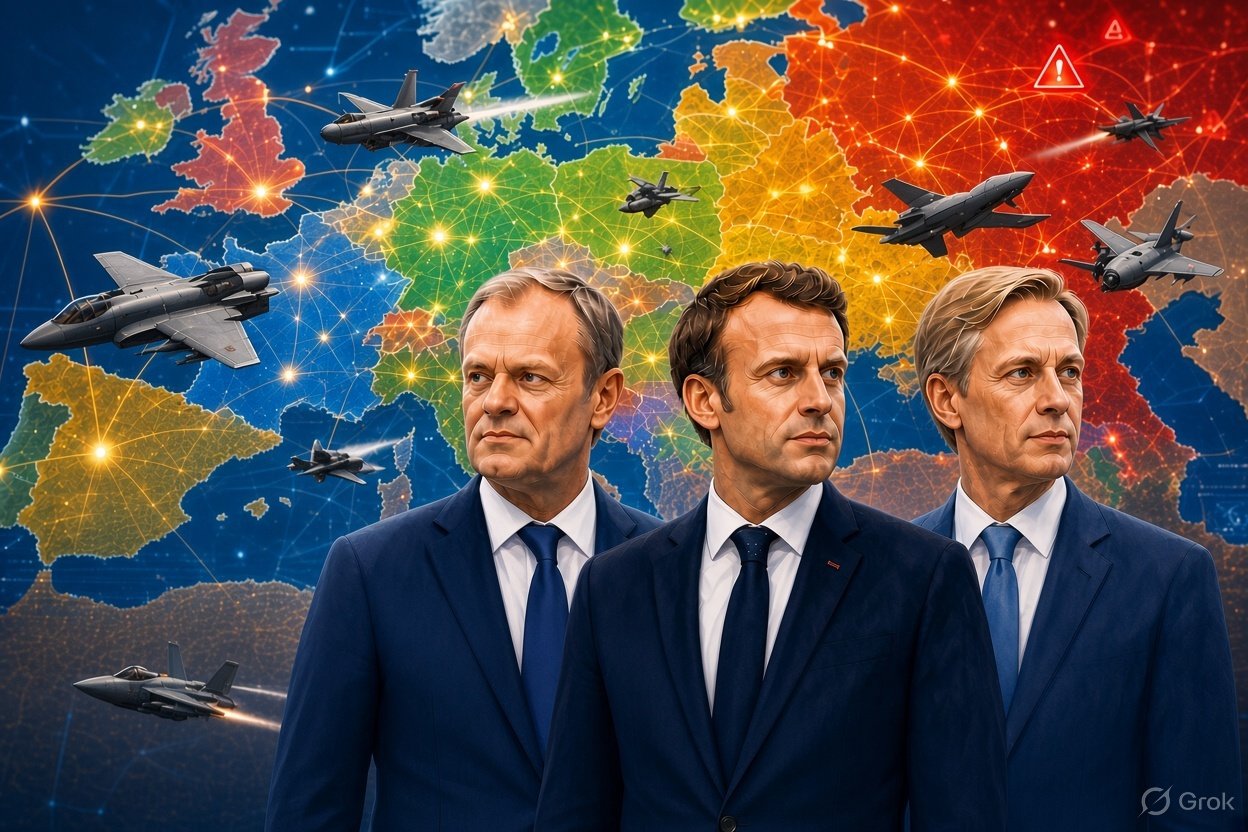
MUMBAI: While global attention remains fixed on the Middle East, a more immediate and serious risk is unfolding on Europe’s eastern flank. Over the past week, leaders from Poland to France and Finland have issued unusually blunt public warnings about the growing danger of wider conflict with Russia.
On 17 September, Polish Prime Minister Donald Tusk told parliament that intelligence assessments — drawn from NATO, Ukrainian and other sources — point to a real possibility of Russian drones or missiles entering NATO territory in the coming months. Moscow, he said, could deliberately frame such incidents as “accidents” to test whether the alliance would treat them as an Article 5 attack or look the other way.
The following day, French President Emmanuel Macron declared that the Russian hybrid threat against Europe had intensified, ordering a government plan to protect critical infrastructure and defence-industrial sites from drones and cyberattacks. Finnish President Alexander Stubb urged citizens to prepare mentally for possible sabotage or further drone incidents, noting that four drones had already fallen on Finnish soil this year.
These statements are not empty rhetoric. They reflect a growing consensus among European intelligence services that Russia is expanding its campaign of hybrid warfare — cyberattacks, sabotage of infrastructure, disinformation and probing airspace violations — while the grinding war in Ukraine continues. The warnings coincide with Russia’s parliamentary elections (18–20 September), in which the ruling United Russia party secured a decisive majority, and with reports of continued high-intensity Russian strikes on Ukrainian cities and logistics.
Moscow’s apparent dual aim, European officials believe, is to degrade Ukraine’s ability to resist while testing NATO’s unity and resolve through incidents that fall short of a clear Article 5 trigger. Western assessments, including those from the alliance itself, still see no imminent risk of a full-scale conventional invasion of a NATO country. NATO’s Military Committee chair has publicly stated that the alliance is ready to respond to escalation, and official threat assessments have not changed on the question of an imminent large-scale attack.
The more probable near-term scenario remains an intensification of hybrid operations: more sophisticated drone and missile provocations near or across the eastern flank, continued attacks on energy and digital infrastructure, and psychological pressure designed to fracture European political will. Poland, the Baltic states and Finland are already raising readiness levels, updating evacuation plans and hardening defences. Germany is preparing civilian and military hospitals for scenarios involving hundreds of casualties a day and is examining the reactivation of Cold War-era medical bunkers. France is securing sensitive industrial and defence sites.
The longer-term danger remains real. If Russia concludes that NATO’s response to limited or deniable strikes remains muted, or if American commitment appears uncertain, the threshold for more serious testing of alliance defences could lower. European governments are therefore racing to rebuild military capacity, stockpile ammunition and strengthen civil resilience. The message from Warsaw, Paris and Helsinki is clear: the era of assuming the conflict will stay confined to Ukraine is over. Europe must prepare for a more dangerous phase of confrontation that stops short of open war yet steadily raises the risk of it.
Reporter
Rommel is our Editor. He has close to three decades of experience in leading publishing houses including, Fortune India, Observer of Business & Politics, The New Indian Express etc.
View Reporter News